

Del Prado · Spain and Morocco · 1922
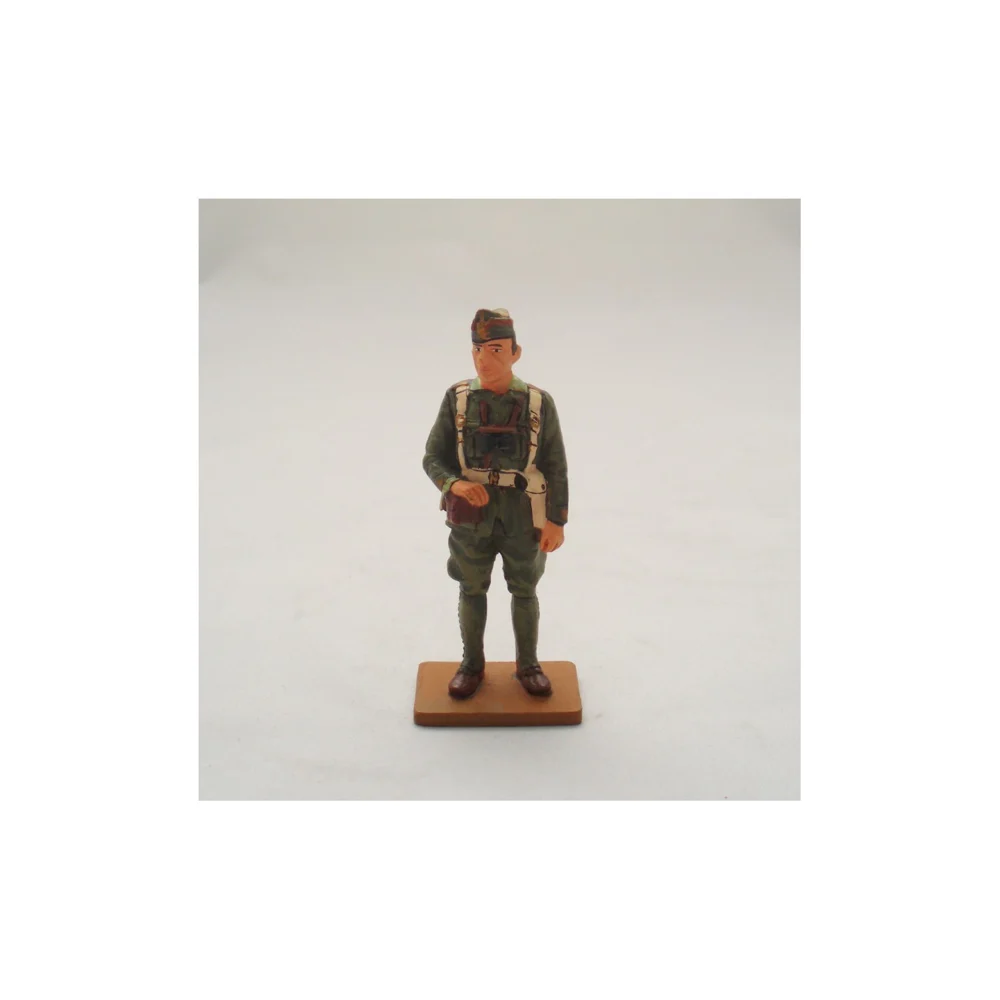
The tasselled cap catches the eye before the date does. Yet 1922 is the detail that makes this officer interesting: the Spanish Legion was still a young formation, and the setting was Morocco rather than the later Spanish Civil War.
- Maker
- Del Prado
- Subject
- Spanish Legion Lieutenant, 1922
- Setting
- Spain and Morocco · 1922
- Type
- Painted metal figure
Del Prado’s lieutenant has a spare, upright outline. Green clothing, dark boots and leather equipment carry the uniform, with the red detail of the cap supplying a small but conspicuous accent. It is an officer portrait that needs a national label; “foreign legion” alone could easily send a buyer toward an entirely different French subject.
A new formation in an existing war
The Spanish Legion began as the Tercio de Extranjeros, created by royal decree on 28 January 1920. The Spanish Army’s unit history records its early organisation around Ceuta and Dar Riffien. The 1922 figure therefore represents the formation only a short time after its creation.
Its early fighting belonged to Spain’s colonial campaigns in Morocco. That context is essential. The figure predates the Spanish Civil War, which began in 1936, and should not automatically be placed in a scene from that later conflict. A uniform that became associated with later events can still represent an earlier, separate chapter.
That beginning gives the lieutenant more substance than a generic officer label. He belongs to the process by which a newly raised formation established itself in a difficult colonial war. The miniature is not a portrait of a named commander, and its rank should not be used to attach one without evidence.
The cap is the obvious point of comparison with French Legion subjects. A French kepi and this Spanish headwear should remain visibly distinct even on a crowded shelf. Put them side by side with clear captions and the display becomes an exercise in identification, rather than an indistinct category of “legionnaires.”
Preserving the details that identify him
Look closely at the cap’s projecting detail and the narrow leather straps. These features can disappear under thick restoration paint. The boots should remain clearly separated from the trousers, and photographs of the rear and base will help distinguish ordinary handling wear from more substantial repairs.
The most useful collecting note is also the simplest: Spanish Legion, lieutenant, 1922. It keeps the right organisation and period attached to a figure whose short auction titles can otherwise lead the eye several decades away from its actual setting.
References and further reading
- Spanish Army — History of the Tercio Gran Capitán
- Spanish Army — Foundation and early Moroccan campaigns of the Legion
- Planète Légendaire — figure reference
- Génie Miniature — Del Prado identification index
The photograph identifies the model; condition and packaging vary between examples offered for sale.