

Del Prado · Figure study
The crested helmet, dark blue clothing and short firearm make this York Rangers figure look different from the later green riflemen. Its 1796 date is the starting point for identification, not a licence to attach any unit history containing the words York and Rangers.
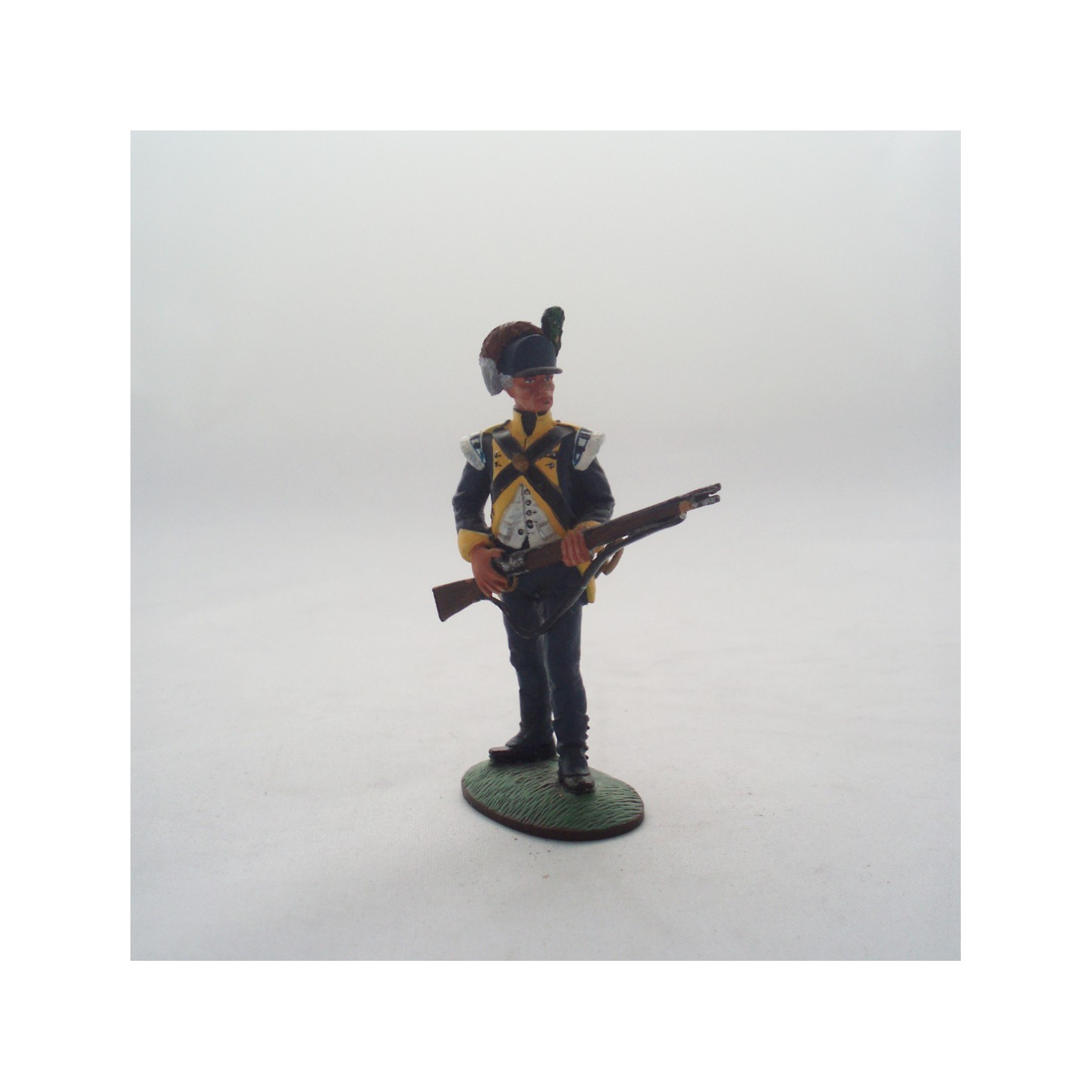
Similar names can lead to the wrong history
The reference retailer identifies a York Rangers fusilier or rifleman of 1796. That title should not be silently expanded into the modern Canadian Queen’s York Rangers or a later similarly named corps. Without the matching booklet, a detailed regimental lineage would be less secure than the visible subject. The catalog therefore preserves the period name and avoids a more elaborate but unverified unit biography.
A useful comparison with the later rifle corps
The National Army Museum’s Rifle Brigade history dates the experimental British rifle corps to 1800 and describes its green clothing and different training. The 1796 Del Prado subject predates that formation. The comparison is chronological and visual; it does not establish a direct organisational descent from this York Rangers unit to the later 95th.
Make uncertainty useful to the collector
If the original booklet becomes available, its full title, unit discussion and issue number can refine the record. Until then, use the confirmed date and photograph rather than borrowing a confident identification from a near-matching auction. Inspect the helmet crest, firearm, hands and painted facings before buying. This figure is worth including because it opens the less familiar years before the best-known Napoleonic uniforms, while also demonstrating why careful naming matters in a broad historical collection.