

Del Prado · Figure study
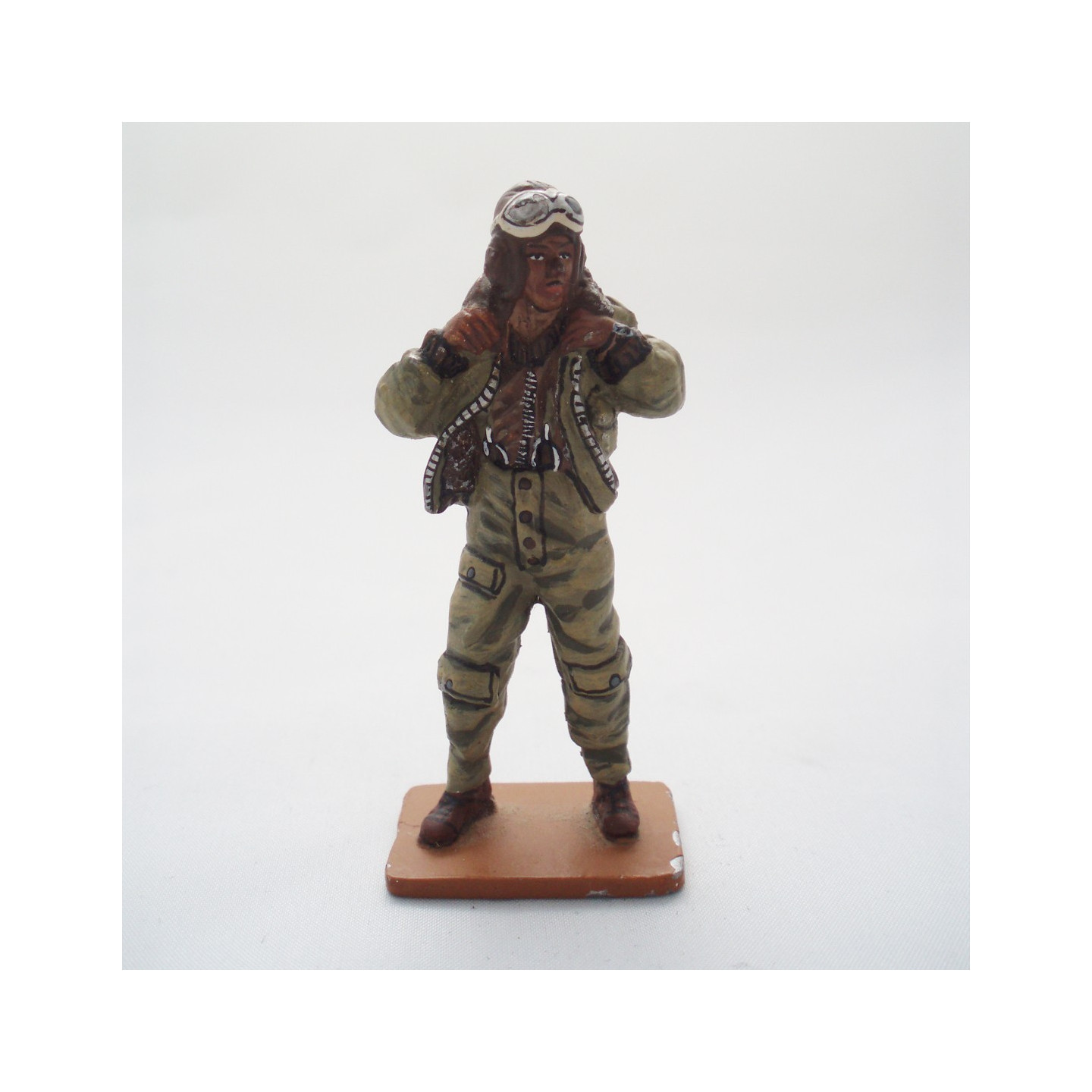
The photographed Black American pilot adjusts his flight equipment rather than posing beside a tally board. The Italy 1944 subject offers a useful connection to the Tuskegee Airmen and to the practical clothing worn for combat flying.
The historical connection is specific
The Air Force Historical Support Division describes the Black flying units of the wartime Army Air Forces and the 332nd Fighter Group’s conversion to P-51s in June 1944. That history fits the setting supplied by the retailer. The miniature remains an unnamed pilot; the record does not establish a portrait of Benjamin O. Davis Jr. or another particular individual.
Aviation history includes segregation
The Tuskegee story belongs to a segregated American military as well as to combat in the Mediterranean. The National WWII Museum’s Mustang display connects pilot training at Tuskegee with that racial separation. A useful caption acknowledges those conditions instead of reducing the subject to a generic tale of a famous fighter aircraft.
A person beside the aircraft
If displayed with a Mustang model, check the visual scale rather than assuming all items labelled 1:30 will look identical. The pilot should remain visible instead of disappearing beneath a wing. Inspect the hands, straps, face and boots when buying. Compare the actual photo and subject title before accepting an issue code from another market. This figure adds a human and institutional story to an aviation shelf: preparation for flight, service in Italy and the unequal system within which Black American airmen served.