

Del Prado · Second World War · Normandy, June 1944
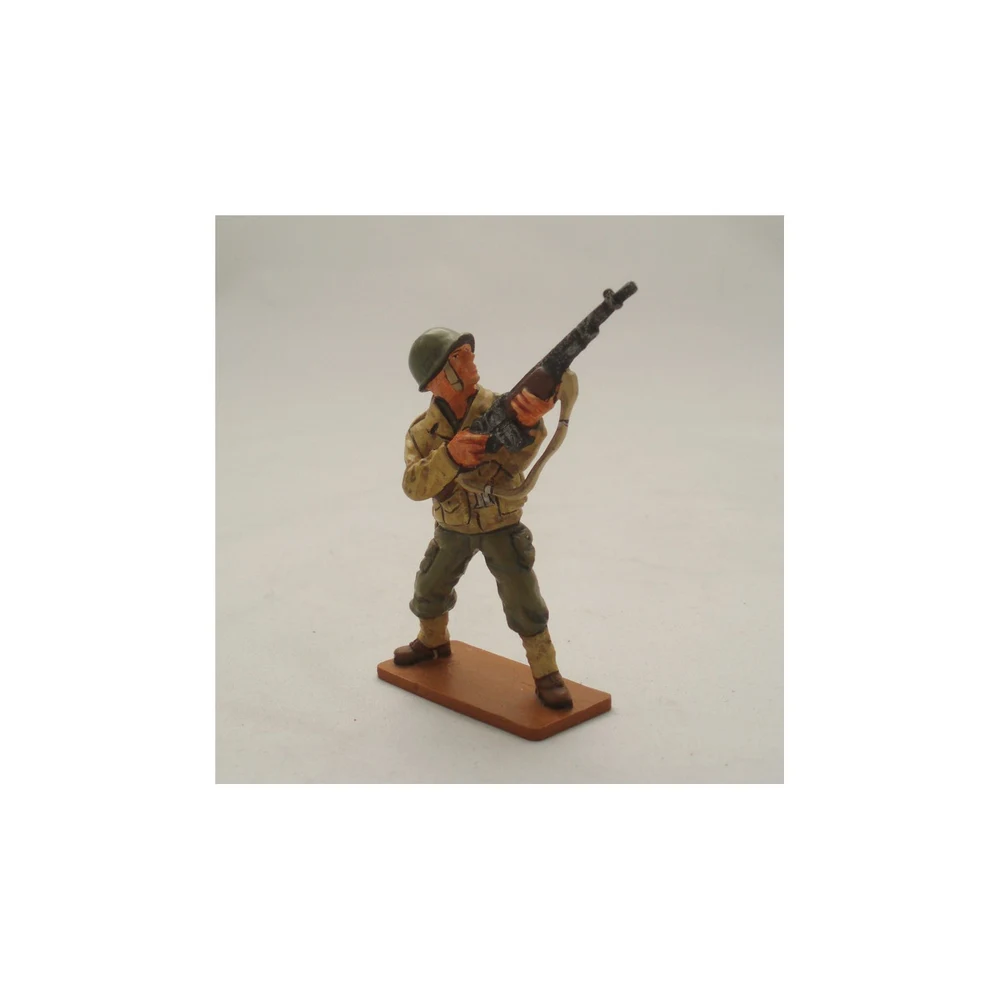
A wide stance and raised rifle give this Del Prado Ranger immediate energy. The Pointe du Hoc reference connects the model with one of D-Day’s best-known infantry operations while leaving the individual soldier anonymous.
- Maker
- Del Prado
- Subject
- US Ranger Pointe du Hoc 1944
- Setting
- Second World War · Normandy, June 1944
- Type
- Painted metal figure
The objective above the cliffs
On 6 June 1944, US Rangers assaulted Pointe du Hoc on the Normandy coast to neutralise a German artillery threat to the landings. The expected guns were absent from their prepared positions; Rangers subsequently located and disabled guns inland. Reaching the top of the cliffs was therefore only part of the operation.
The model’s reference names Pointe du Hoc. That supports a specific campaign connection, but the sculpt should not be identified as a portrait of one of the participants without additional documentation. It represents the fighting infantry role.
A rifle raised into the composition
The photograph shows a helmeted soldier in olive clothing, legs spread on a rectangular base and a rifle angled steeply upward. Both hands support the weapon. The line from the forward foot through the arms to the muzzle gives the model more movement than the range’s standing uniform studies.
Viewed straight on, some of the rifle overlaps the head and shoulder. A three-quarter photograph is better for judging the full weapon and both hands. It also shows whether the pose has been altered by a bent barrel or damaged arm.
Protecting the moving outline
Check the muzzle, rifle stock, wrists and helmet rim. The high weapon needs more clearance than the figure’s body height alone suggests. Ask how the seller will protect it during shipping without pressing packing material against the barrel.
Place the Ranger where the diagonal weapon has empty space above it. A low scenic base can suggest Normandy terrain, but avoid hiding the wide stance behind a wall. A concise Pointe du Hoc label supplies the historical setting while keeping attention on the figure.
For a catalog photograph, position the camera so the muzzle does not overlap another figure or the edge of the frame. Include a little extra space above the rifle. This records the complete pose and avoids the misleading impression of a shortened barrel that can result from a tightly cropped image of an action figure.
References and further reading
- American Battle Monuments Commission — Pointe du Hoc Ranger Monument
- Planète Légendaire — figure reference
- Génie Miniature — Del Prado identification index
The photograph identifies the model; condition and packaging vary between examples offered for sale.