

Del Prado · Figure study
The helmet markings, arm identification and medical bags distinguish this figure from the riflemen around him. Del Prado’s 94th Division subject makes care and casualty handling part of the collection’s account of the final European campaign.
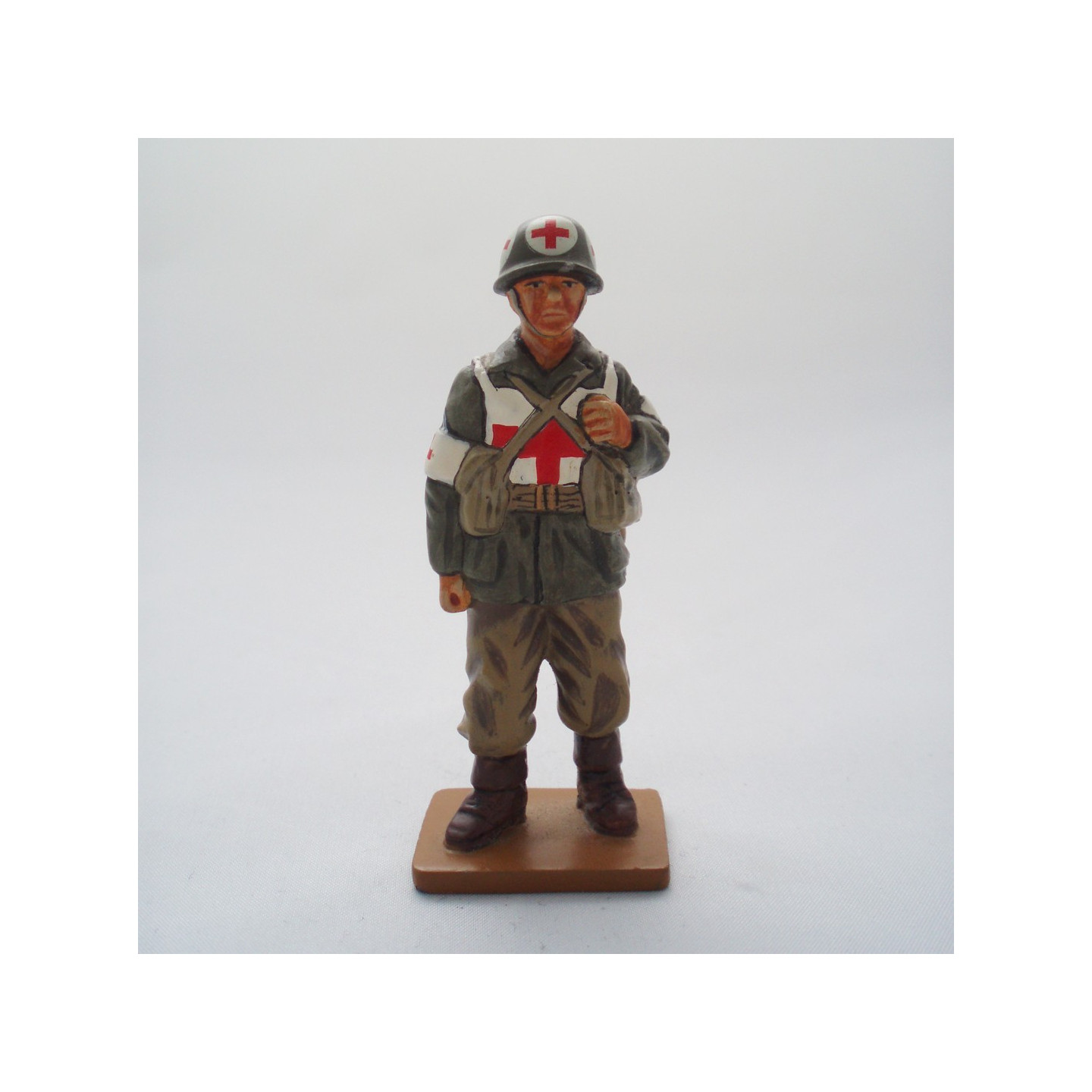
Medic is the careful identification
The retailer’s translated title uses “doctor,” but the photograph alone does not establish a commissioned physician. “Medic” accurately describes the represented medical role without inventing qualifications or rank. The large red-cross markings are the strongest visual clue, supported by the bags carried at the body. Those features should remain visible in any display or sale photograph.
The bags tell a different infantry story
The compact pouches and prominent identification markings shift attention from a weapon to the equipment needed to assist others. A standing pose can represent a pause in movement or readiness to respond. It is often more effective to place the medic near, rather than directly on top of, a casualty group so the role stays legible and the scene does not become crowded.
A collection should show what happens after injury
This subject adds a necessary counterpart to the many figures depicted firing, advancing or falling. A small pairing with a supported casualty can suggest the human consequences of combat without inventing a medical procedure. Inspect the helmet markings, bags, straps and hands when buying; worn paint can obscure the role as effectively as a missing accessory. Keep the divisional association tied to the reference record, and describe the figure as an unnamed medical soldier rather than supplying a heroic biography that the sculpt does not document.