

Del Prado · Napoleonic Wars · France, 1811
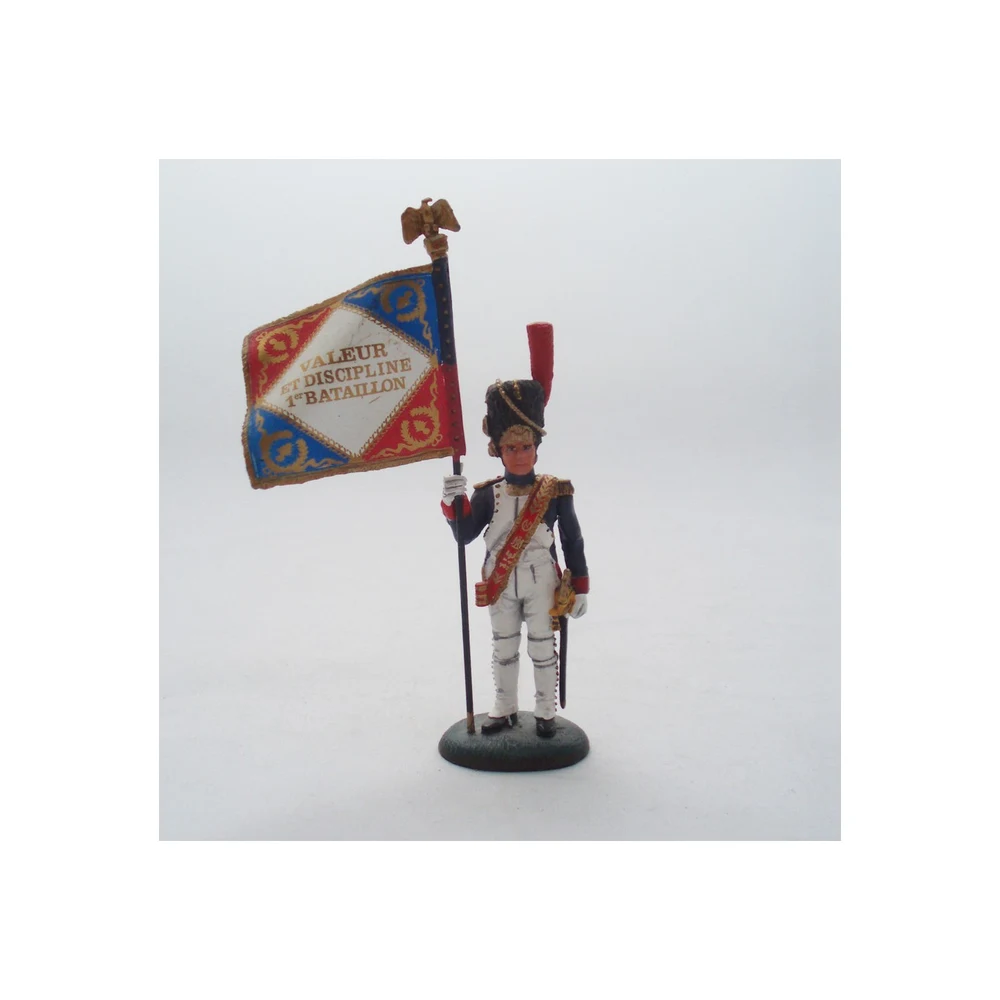
The flag gives this Del Prado Guard figure a broad silhouette above an otherwise narrow standing pose. It is a miniature about the visible identity of a regiment as much as the uniform of one soldier.
- Maker
- Del Prado
- Subject
- Imperial Guard Eagle Bearer 1811
- Setting
- Napoleonic Wars · France, 1811
- Type
- Painted metal figure
The eagle and the cloth
Napoleon adopted the eagle as an imperial emblem in 1804. In a military standard, the metal eagle above the staff and the fabric hanging below were separate elements. Both matter when identifying a model: a flag-bearing figure should not be judged solely by the colour of its cloth.
Colours and standards helped troops recognise their formation and carried powerful associations with honour and service. This gives the bearer a natural place at the centre of a regimental display. The figure’s 1811 label is the safest starting point; later flag patterns should not be assumed to apply unchanged.
A tall figure with a wide outline
The reference example wears a dark coat with a pale front, light trousers and tall headgear. The staff rises beside him, while the painted flag spreads outward to the viewer’s left. Its pale centre and darker borders draw attention before the smaller details of the uniform.
Look at the flag as a sculpted object as well as a painted design. The folds create shadows that can conceal small losses along the edge. A straight staff, complete finial and intact attachment at the hand make a larger visual difference than tiny variations in the lettering.
Giving the standard room
Set this bearer slightly forward of neighbouring figures so the flag does not merge into their plumes. Check shelf clearance before moving a tray into a cabinet. Handle the base rather than the flagstaff, and avoid packing material that can snag the projecting cloth. For comparison, a line infantry standard bearer shows how Del Prado treated a similar responsibility outside the Guard.
A display devoted to standards can be arranged by the shape of the flags as well as by nationality. Put this broad, open design beside the more closely folded line infantry standard. The comparison draws attention to how a sculptor makes a flat painted emblem readable as a small three-dimensional object.
References and further reading
- Fondation Napoléon — Imperial eagles
- National Army Museum — Save the Colours!
- Planète Légendaire — figure reference
- Génie Miniature — Del Prado identification index
The photograph identifies the model; condition and packaging vary between examples offered for sale.