

Del Prado · Hungarian cavalry tradition · 1756
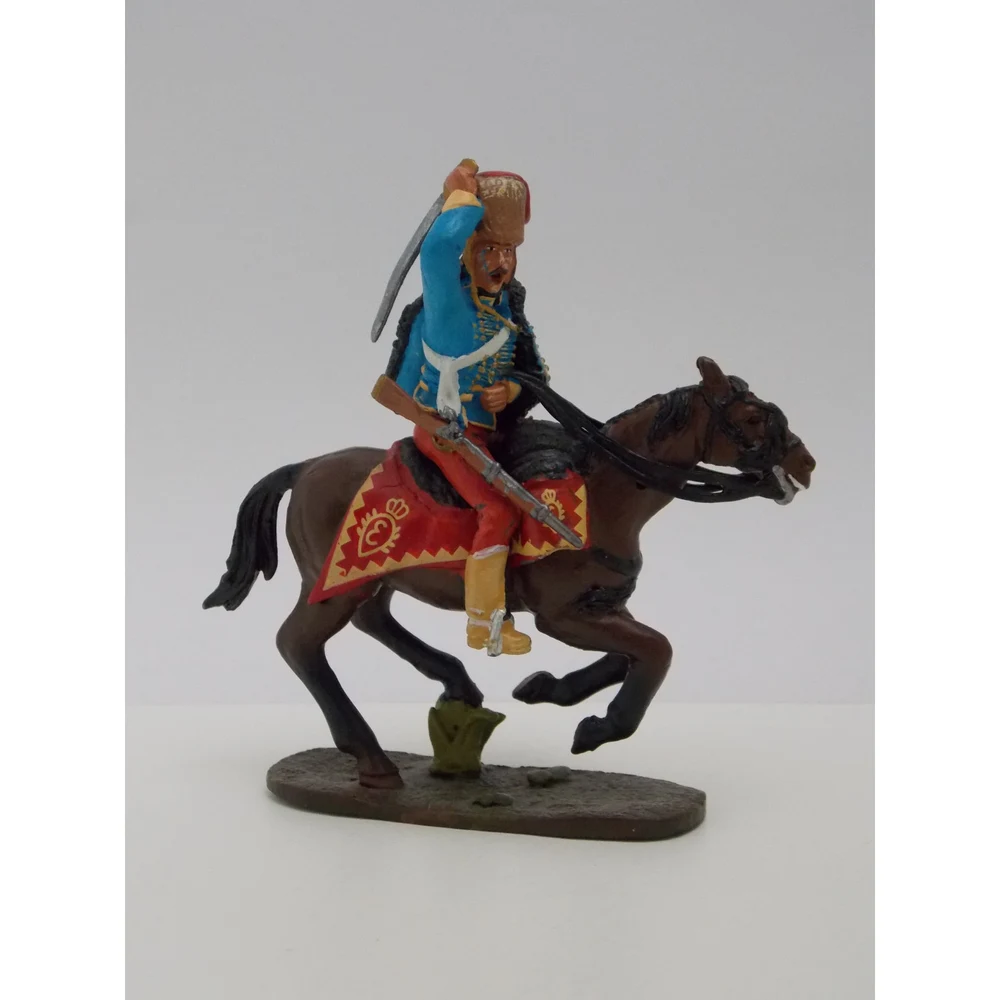
A blue upper garment and red saddle covering make this hussar a colourful addition to Del Prado’s earlier cavalry subjects. The Esterházy name adds historical interest, but also requires care when identifying a regiment.
- Maker
- Del Prado
- Subject
- Hungarian Esterházy Hussar, 1756
- Setting
- Hungarian cavalry tradition · 1756
- Type
- Painted metal mounted figure
The rider sits on a dark, moving horse, with a fur-edged garment shaping the upper body. The bright red cloth beneath the saddle balances the blue of the uniform. The figure’s extended outline rewards a side view, where the clothing and horse can be read together.
A name that travelled
Esterházy was a prominent Hungarian aristocratic name associated with more than one military formation. Hussars and officers of Hungarian origin also served outside the Habsburg lands. The history of French hussar regiments, for example, includes separate formations that carried the Esterházy name at different dates.
The family’s regimental history also records an Emerich Esterházy formation in Habsburg service. These overlapping names are a reason to investigate further, not a licence to merge different units. The Del Prado index identifies this model as a Hungarian Esterházy hussar of 1756; the available figure references do not establish a particular regimental proprietor beyond that wording.
Collect the visible details first
The blue garment, fur edging, red saddle covering and horse pose form a useful identification checklist. Compare the combination with the reference photograph before relying on a seller’s broad “Austrian hussar” or “French hussar” label.
Inspect the raised edges of the clothing for paint wear, especially where contrasting colours meet. The headgear, reins and horse’s ears are more vulnerable than the large painted areas. A photograph from behind can show the drape of the upper garment and whether the rider sits correctly.
This subject works well beside the Prussian heavy cavalryman at Leuthen. The adjacent dates create a coherent period comparison, while the different silhouettes show how varied mounted troops could look. Keep the captions precise enough that an attractive colour grouping does not become an unsupported order of battle.
The model is most useful as a starting point for that careful comparison. Its distinctive clothing deserves attention even while the finer regimental attribution remains open.
References and further reading
- Revue historique des armées — Hussars in eighteenth-century French service
- Esterházy family history — Emerich Esterházy Hussar Regiment
- Planète Légendaire — figure reference
- Génie Miniature — Del Prado identification index
The photograph identifies the model; condition and packaging vary between examples offered for sale.