

Del Prado · First World War · France, 1914–15
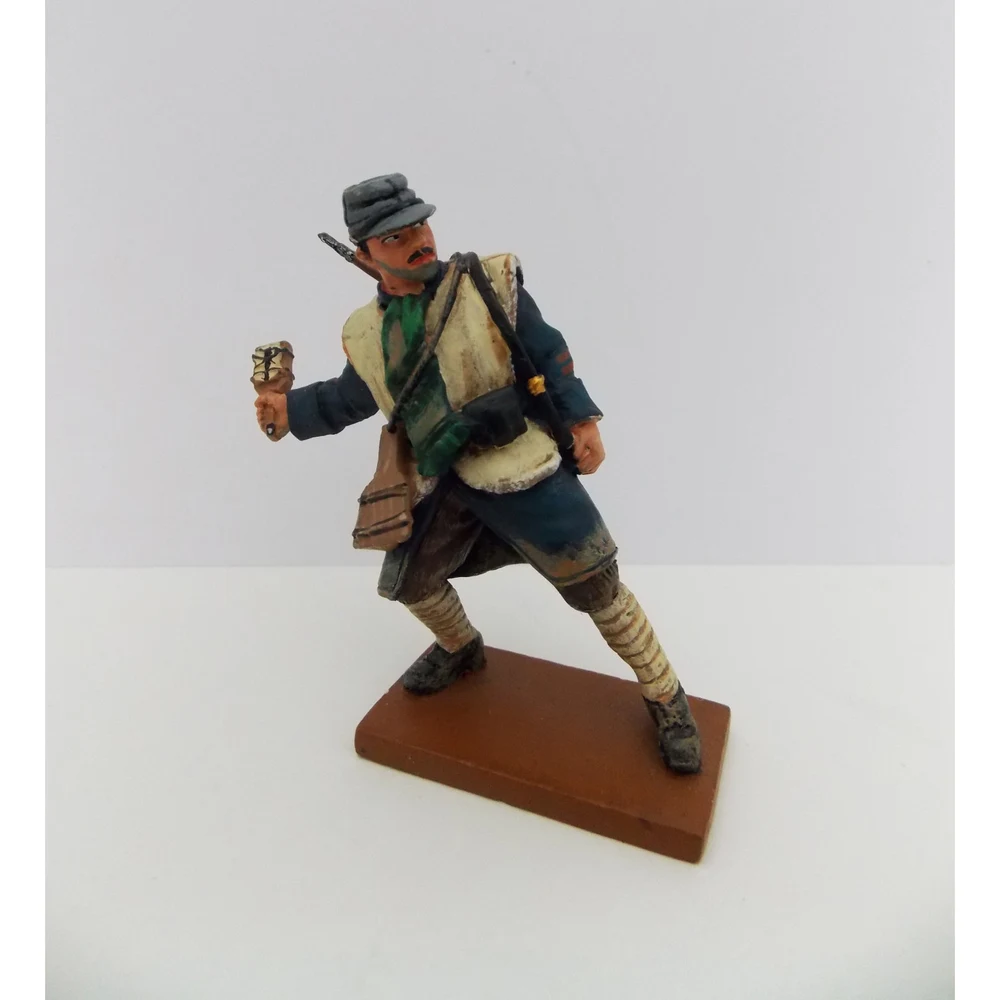
The wide stance, dark cap and layered clothing make this French corporal more animated than a standard marching figure. His 1914–15 date places the subject during a rapid change in French infantry dress and equipment.
- Maker
- Del Prado
- Subject
- French 8th Infantry Corporal 1914-15
- Setting
- First World War · France, 1914–15
- Type
- Painted metal figure
A transitional period
French infantry entered the war in 1914 with uniforms that still included the conspicuous red trousers associated with the pre-war army. The experience of modern firepower helped drive changes in clothing and protection. By 1916, horizon-blue dress and steel helmets produced a very different general appearance.
The reference dates this corporal of the 8th Infantry Regiment to 1914–15. That span matters: early-war clothing did not change everywhere at a single instant. A figure wearing mixed or transitional items should be judged against its stated period rather than an idealised late-war uniform.
A pose with room around it
The dealer photograph shows a dark cap, blue-toned upper clothing, pale equipment straps and wrapped lower legs. The soldier stands with his legs spread, one arm projecting forward and equipment carried around the body. The angled stance creates more movement than a simple attention pose.
The small object in the extended hand and the equipment near the hip need a close photograph before assigning exact technical names. What is clear is the sculpt’s broad shape and the contrast between the dark clothing and light straps. These are useful identification cues when browsing a mixed lot.
Condition and a chronological comparison
Inspect the extended hand, the cap peak and any equipment projecting away from the torso. Check both feet where they meet the base: a wide pose can make damage easier to see from below. Light straps may reveal touch-ups that blend into the darker coat elsewhere.
Display the corporal beside a later French infantryman to show the change in silhouette and colour. Give his projecting arm clear space, and keep the base level so the active pose remains convincing.
For a comparison photograph, avoid placing a neighbouring soldier directly behind the extended hand. The two outlines can merge and make the small accessory hard to recognise. A little empty space around the corporal’s upper body preserves the active pose, while a clear lower edge keeps both feet and the rectangular base visible.
References and further reading
- Musée de l’Armée — French infantry uniforms in 1914 and 1916
- Planète Légendaire — figure reference
- Génie Miniature — Del Prado identification index
The photograph identifies the model; condition and packaging vary between examples offered for sale.