

Del Prado · Italo-Ethiopian War · Ethiopia, 1935
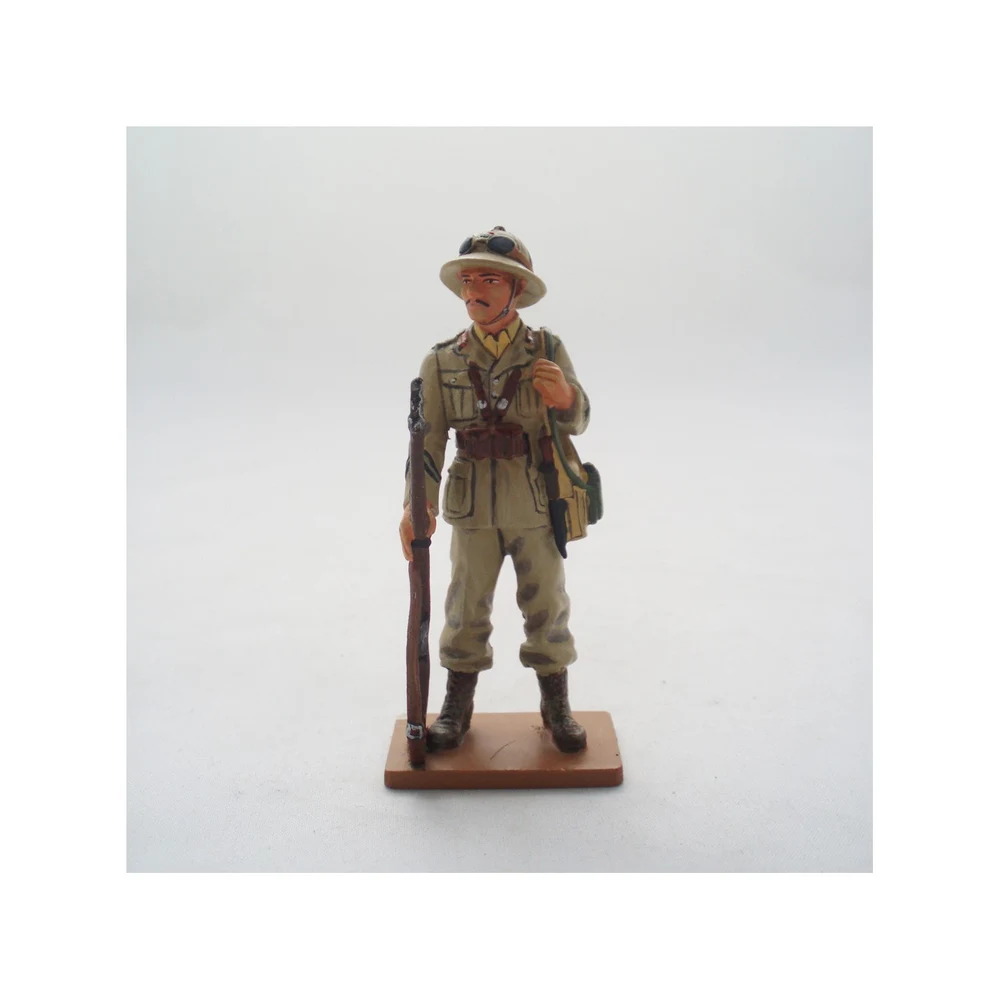
Light headgear and a practical field uniform set this Italian corporal apart from European winter-war subjects. The 1935 Abyssinia label places the figure in Italy’s invasion of Ethiopia, before the Second World War began in Europe.
- Maker
- Del Prado
- Subject
- Italian Infantry Corporal Abyssinia 1935
- Setting
- Italo-Ethiopian War · Ethiopia, 1935
- Type
- Painted metal figure
Name the campaign clearly
Fascist Italy invaded Ethiopia in 1935 as Mussolini sought to expand its African empire. Ethiopia’s emperor, Haile Selassie, appealed to the League of Nations in 1936. The campaign belongs to the history of colonial aggression and the failures of collective security between the world wars.
“Abyssinia” is the historical place-name used in the figure reference. Ethiopia is the clearer modern geographic description. Keeping both terms in the entry helps collectors match older packaging while understanding the setting accurately.
A compact tropical subject
The dealer photograph shows an olive-toned uniform with lighter brimmed headgear, equipment across the chest and a long firearm at the side. The standing pose leaves the front of the torso visible. Wrapped lower legs and dark shoes give the figure a continuous field-service appearance.
The rank is supplied by the catalog description: corporal. Small painted marks in a listing may not be sharp enough to confirm every detail independently. Compare the shape of the headgear, the arm positions and the equipment arrangement when identifying a loose example.
Looking beyond the front view
Ask for a clear view of the hat brim, firearm and back of the equipment. The brim’s edge is exposed, and a weapon held close to the body can conceal a bend. Check the light headgear for repainting that obscures moulded lines.
A chronological Italian group works well: an Ardito dated 1917, this corporal of 1935 and a later Second World War subject. Give each its own campaign label. The sequence makes changes in dress visible while preventing three distinct wars and roles from blending into a single generic army display.
When using older auction descriptions, retain the historical spelling in your search notes but use Ethiopia in explanatory text. This makes the entry easier to connect with modern maps and histories. A short campaign label is particularly valuable here because similar tropical clothing appears on figures representing different Italian operations and later dates.
References and further reading
- Library of Congress — Haile Selassie’s address to the League of Nations, 1936
- Planète Légendaire — figure reference
- Génie Miniature — Del Prado identification index
The photograph identifies the model; condition and packaging vary between examples offered for sale.