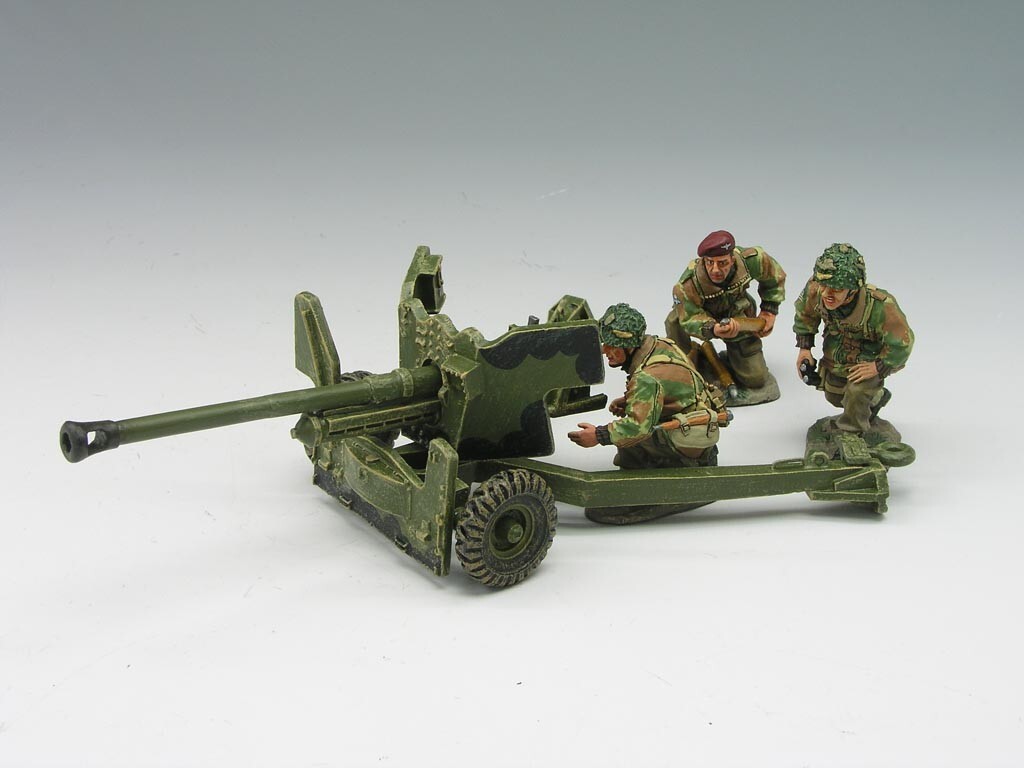
KING & COUNTRY WW2 OPERATION MARKET GARDEN MG019 AIRBORNE 6POUNDER ANTI TANK GUN
Overview
-
Introductory overview
-
History section: airborne 6‑pounder at Market Garden
-
Collector notes
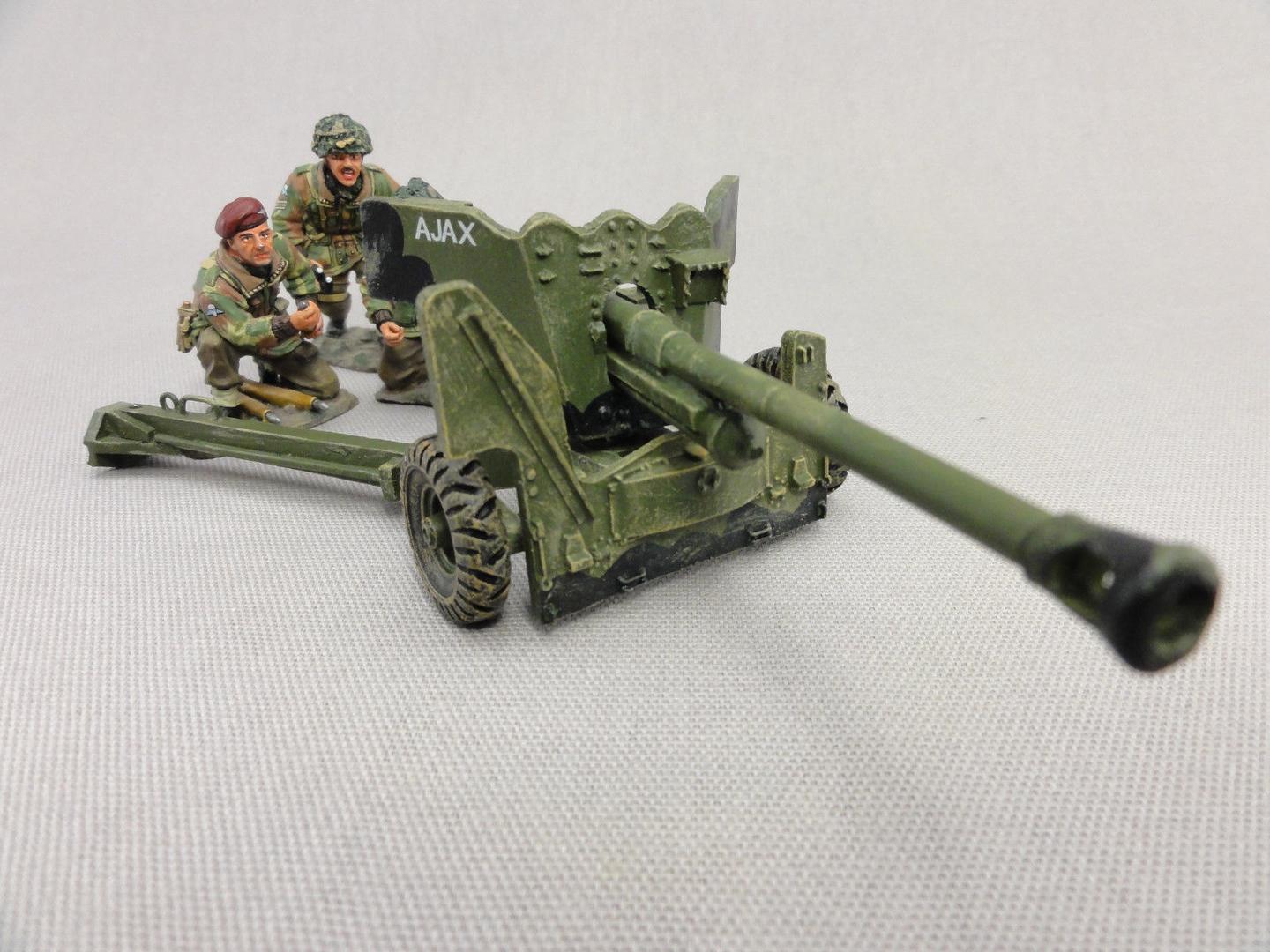
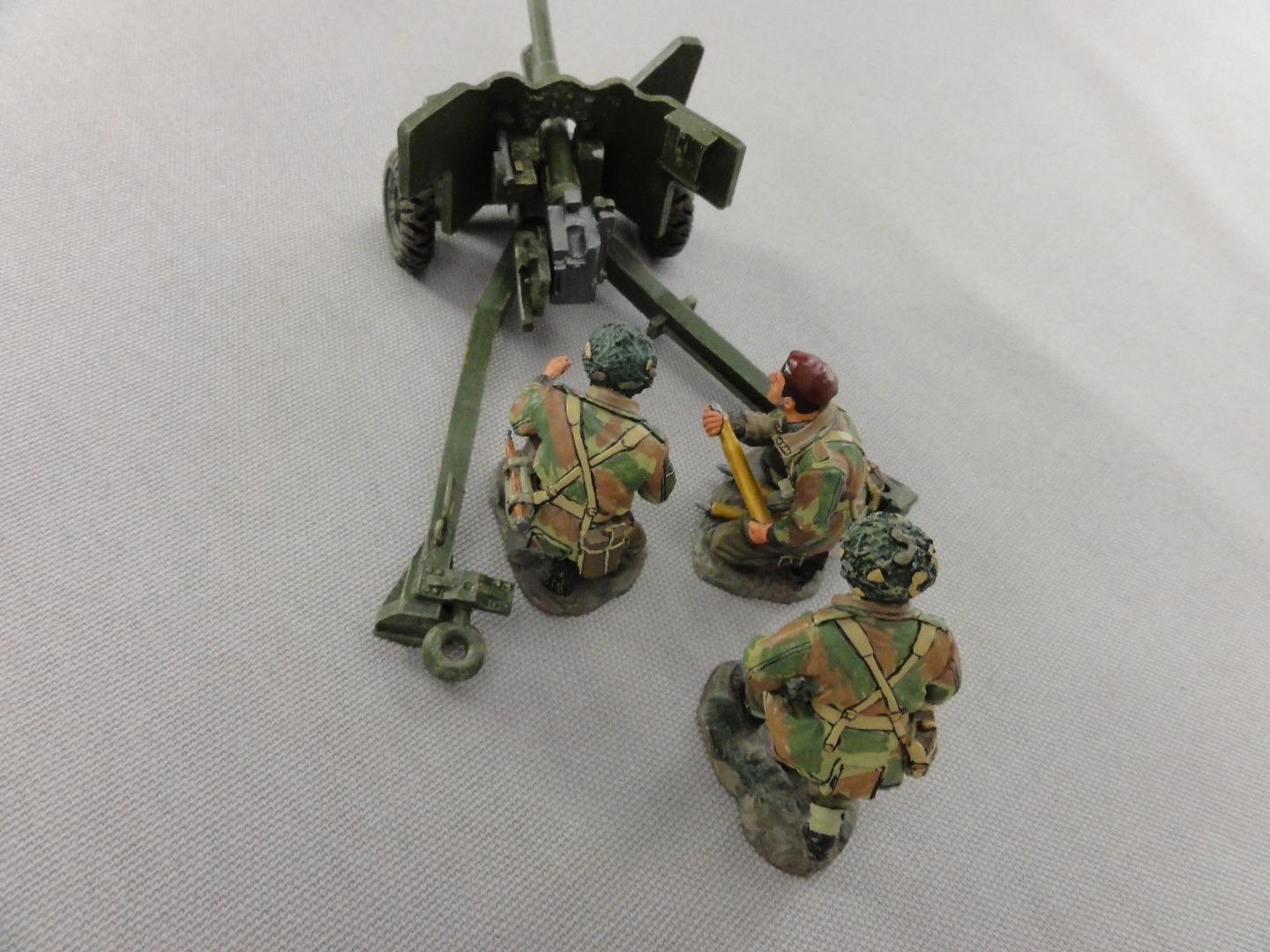
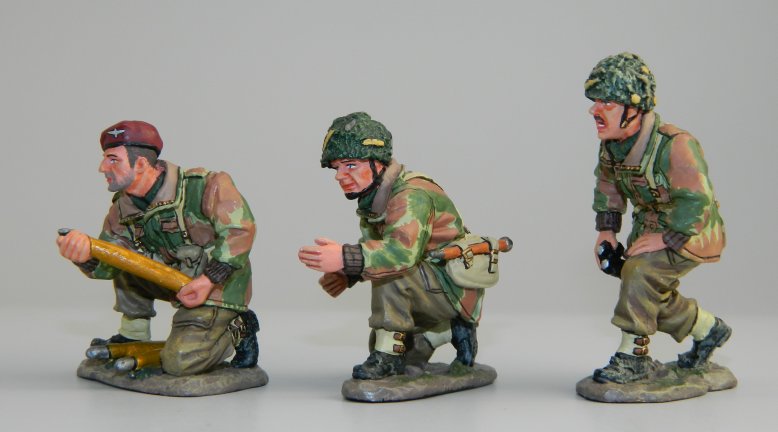
The King & Country Operation Market Garden MG019 “Airborne 6 Pounder Anti Tank Gun Set” offers collectors a finely detailed, 1:30 scale representation of British airborne artillery in WWII. Released in December 2007, this retired set includes three parachute infantry figures—two kneeling, one crouching—posed around a QF 6‑pounder anti‑tank gun in airborne configuration. Cast in lead/tin alloy and factory-painted, it captures a pivotal facet of British glider‑borne operations during the daring Arnhem campaign.
Historical Background
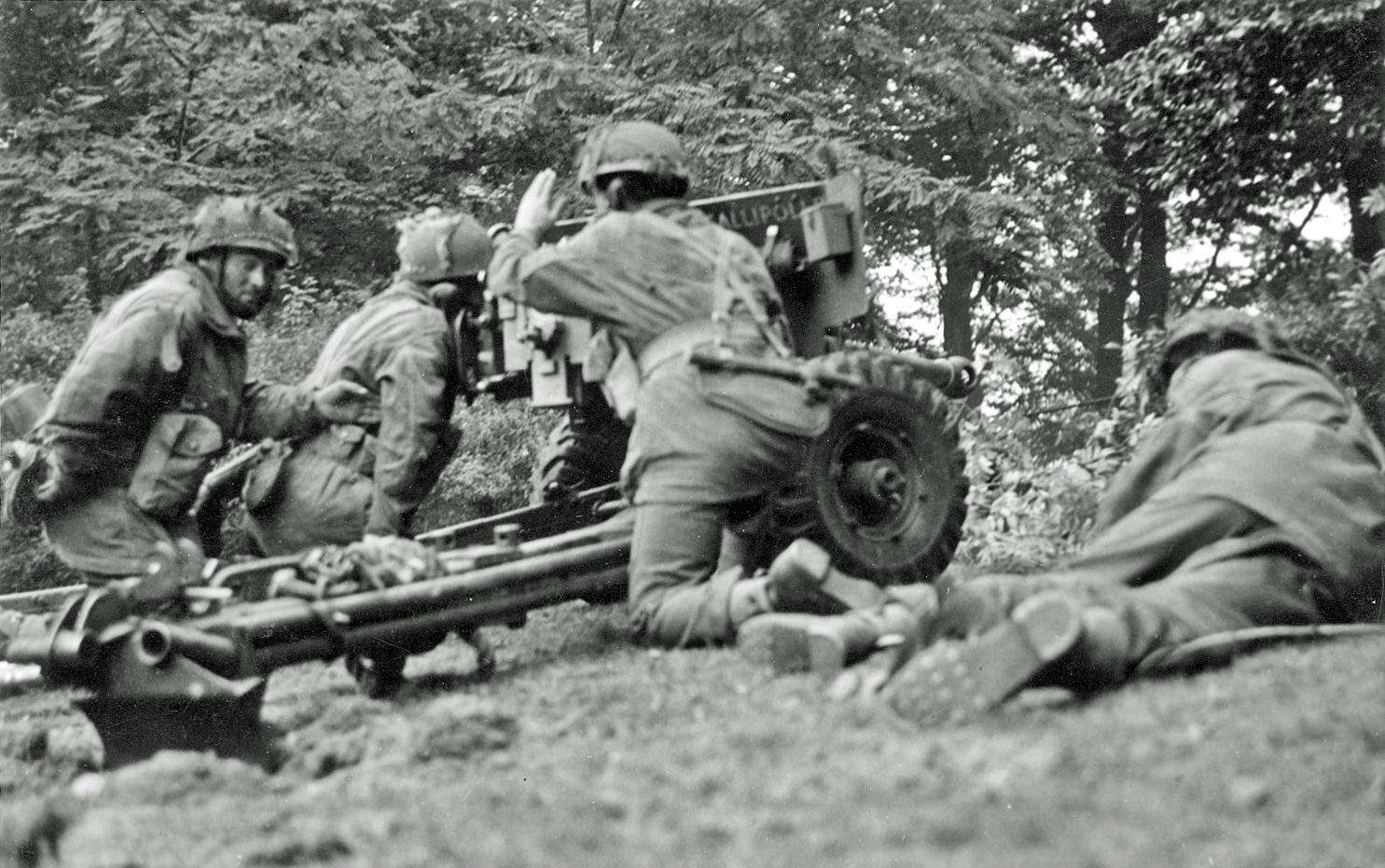
During Operation Market Garden in September 1944, the British 1st Airborne Division sought to secure key bridgeheads—most famously at Arnhem—via glider‑borne deployment of light artillery. The QF 6‑pounder anti‑tank gun, officially designated Ordnance Quick Firing 6‑pounder, was adapted for airborne use by stripping weight and configuring collapsible wheels to fit into Horsa gliders. In Arnhem, each gun team typically comprised a section of three men plus a commander, flying in Horsa gliders that carried minimal ammunition—often only around 42 rounds per gun, far below standard Royal Artillery allowances, due to weight constraintsiteited(arnhemjim.blogspot.com). Once on the ground, these parachute artillerymen—armed with their 6‑pounders—engaged German armor and supported infantry during fierce engagements around Oosterbeek and Nijmegen.
The guns were effective against medium tanks at ranges up to several hundred meters, though supply limitations severely hampered sustained operationsiteited(reddit.com). Notably, historical accounts report that initial hits from 6‑pounder AP rounds sometimes proved insufficient, necessitating follow‑up by heavier artillery or PIAT teamsiteited(reddit.com). Overall, the airborne 6‑pounder represented a critical compromise between firepower and portability. Deployed via glider under restrictive logistic conditions, it nonetheless provided the Airborne forces with some anti‑armor capability essential in the largely infantry‑centred battle for Arnhem. This weapon helped delay German armored counterattacks and supported holding actions, contributing significantly to the fighting withdrawal of trapped units during the ultimately ill‑fated campaign.
Collector Notes
The MG019 set was released in December 2007 and retired in October 2012 by King & Countryiteited(sagerssoldiers.com). It is cast in lead/tin alloy in 1:30 scale, factory-painted, and includes three Airborne paratroopers and the 6‑pounder gun in airborne configurationiteited(lastdodo.com). Typical secondary‑market prices range around USD 125 at retirement; later listings (e.g., Australia) show prices upward of USD 325—reflecting scarcity and collector demanditeited(toysoldiers.com.au). Collector watchers should inspect the slender gun barrel and spokes for bent or broken parts—especially the thin airborne wheel assemblies. Paint wear often appears on raised edges of the figures’ uniforms and the barrel’s muzzle. Boxes and original sleeve art are rare but significantly boost value.
Variants are not documented, though paint shades may differ slightly across production runs. Price fluctuates: well‑preserved boxed examples regularly fetch USD 150–200; loose or damaged sets remain in the USD 80–120 range depending on condition.
Find this set
Currently available on eBay
Matching MG019 listings, lowest displayed price first. Includes shipping when quoted.