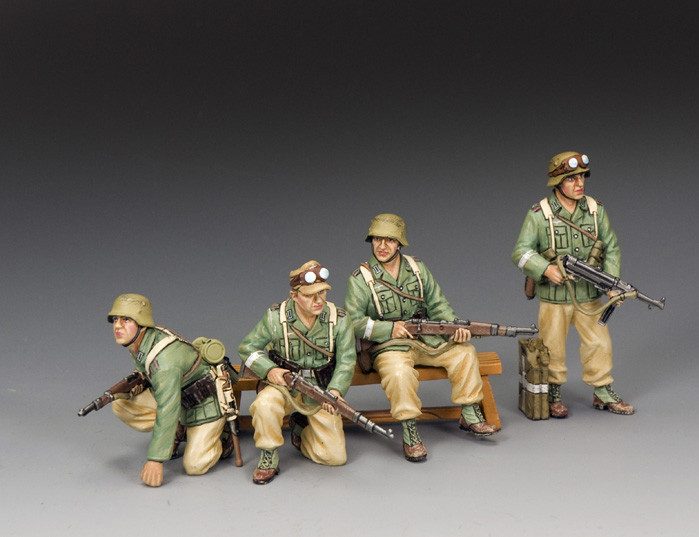
AK157 THE AK TANKRIDERS SET BY KING AND COUNTRY
Overview
Introduction to the set
Specifications and release context
Historical context: German tank tactics in North Africa
Collector notes
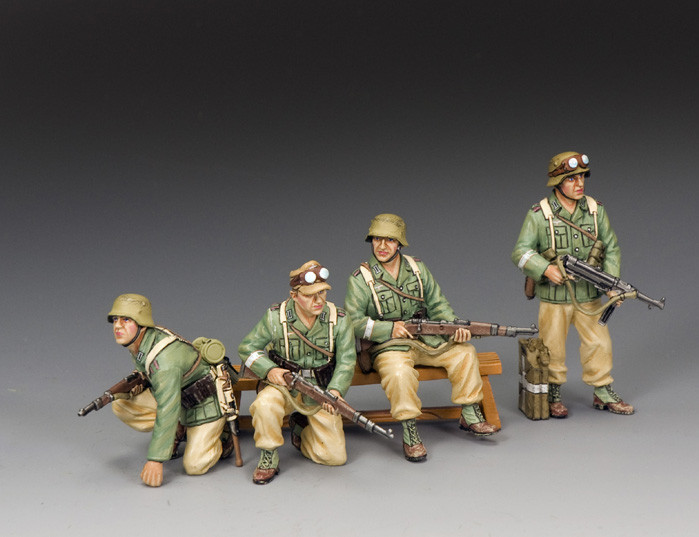
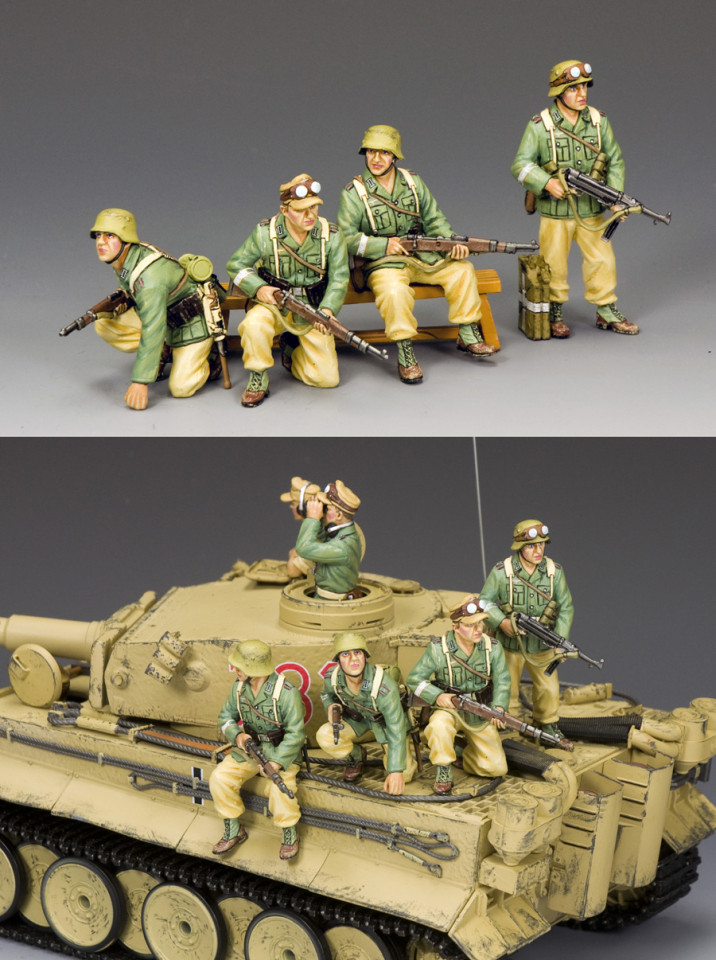
The AK157 “The AK Tankriders Set” by King & Country offers an evocative window into Afrika Korps field operations in North Africa. Released in early February (year unspecified by maker but marketed recently), this four‑figure set includes three kneeling or seated troopers armed with Karabiner 98k rifles and one standing figure wielding an MP40 submachine gun. Designed without bases, these figures are intended to mount on King & Country’s tank or vehicle models, enhancing diorama flexibility. Moreover, the figures’ realistic poses and authentic weapon choices make them a compelling addition for collectors focused on Wehrmacht armoured tactics.
Historical Background
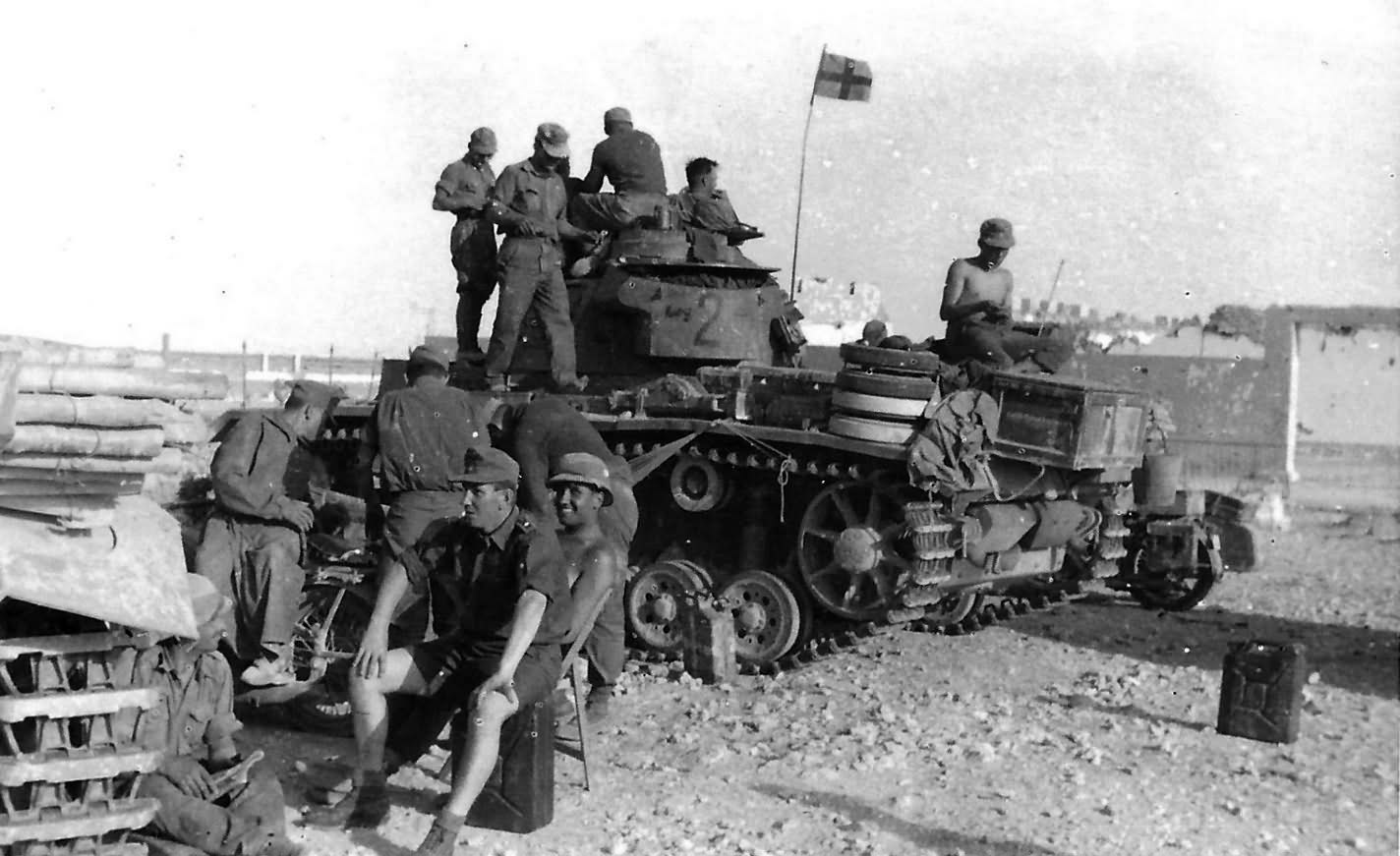
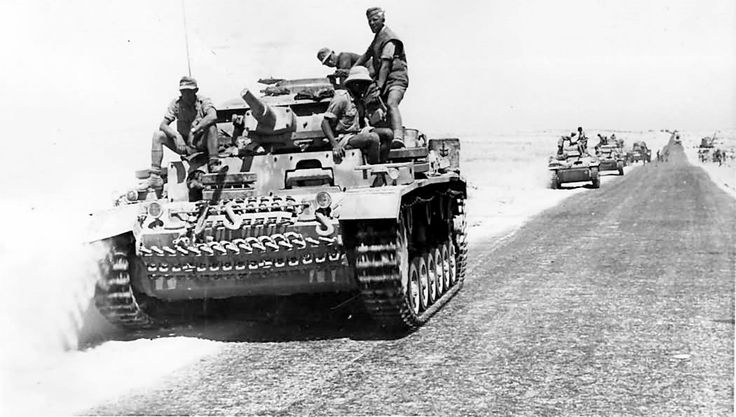
The AK157 Tankriders Set represents Deutsche Afrika Korps (DAK) tank riders during the North African Campaign, which lasted from February 1941 to May 1943. These soldiers rode aboard tanks—often Tigers, Panzer IIIs, or Panzer IVs—to dismount rapidly and engage in infantry support, reconnaissance, or anti‑infantry actions against British Eighth Army and Commonwealth forces. The set’s figures carry Kar98k rifles, standard German bolt‑action weapons, and an MP40 machine pistol—highlighting their readiness for close terrain or vehicle close‑quarters combat. German tank doctrine in the desert involved combined arms and mobile warfare.
Rommel’s forces utilized fast, flexible movements across the vast deserts, leveraging armored columns to exploit gaps in Allied lines, particularly during Operations Sonnenblume (February 1941) and Crusader (late 1941), as well as the pivotal battles of Gazala and Tobruk in 1942. Tank riders were vital: they secured flanks, cleared anti‑tank gun nests, or reinforced dismounted infantry operations when tanks encountered dug‑in positions or ambushes. The AK157 figures depict this adaptability—one stands ready with an MP40 for close‑range defense, while the others brace with rifles, prepared to dismount under fire. In particular, the use of Kar98k rifles was typical for dismounted tank riders, offering accuracy and range, while the MP40 gave rapid suppressive fire capability, useful when infantry support became urgent.
North Africa’s harsh terrain and heat stressed German logistics; radio comms were essential, yet disruptions often left riders to act autonomously in chaotic conditions. Consequently, their ability to quickly leave the vehicle and engage could influence operational outcomes, such as holding captured positions or covering withdrawals. Overall, the AK157 set captures a small but significant aspect of Afrika Korps tactical practice: armored-infantry cooperation under extreme environmental and combat pressures, emblematic of desert warfare and the innovation that underpinned German advances and defensive maneuvers.
Collector Notes
Identification of the AK157 set is straightforward via official King & Country listings, where it appears under the World War II » Afrika Korps category, priced at USD185.00 (kingandcountry.com). The figures—four unbased troopers—complement armored vehicle models like King & Country’s Tigers or other AK Fighting Vehicles (kingandcountry.com). Variants: Unlike some other sets, AK157 appears only in this configuration, with no known variants. The lack of bases allows flexibility but means that careful handling is required to ensure figures remain secured on vehicles. Paint applications follow standard DAK desert tones: field grey uniforms with sand camouflage, MP40 and Kar98k in metallic and wood tones. Check for paint wear on hands and weapons—common handling defects.
Packaging: Typically sold in a color presentation box consistent with King & Country standards, though packaging may vary between releases. SHA (single‑handling) condition and full original packaging enhance value. Condition: Look for any bending in limbs or weapons; these figures are metal. The MP40’s barrel and the thin rifle stocks are most prone to damage. Rust isn’t common but can occur around unpainted joints. Secondary‑market pricing: While MSRP is USD185, mature collectors report secondary prices ranging from USD160 to USD200 depending on box and figure condition. Complete MIB (mint in box) units usually fetch toward the higher end, while loose or bagged figures sell closer to the MSRP or below, especially if minor paint or structural wear is present.
Find this set
Currently available on eBay
Matching AK157 listings, lowest displayed price first. Includes shipping when quoted.