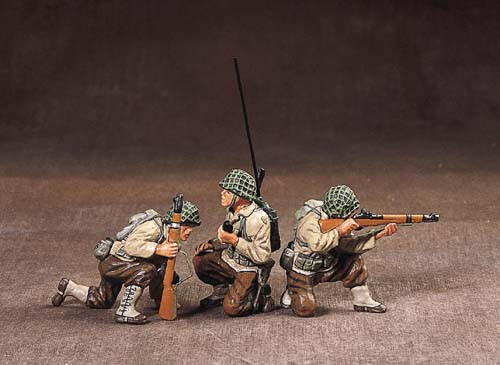
DD018 SIGNALS SECTION BY KING & COUNTRY
Overview
Intro
History Section: Signals Sections on D‑Day
Collector Notes
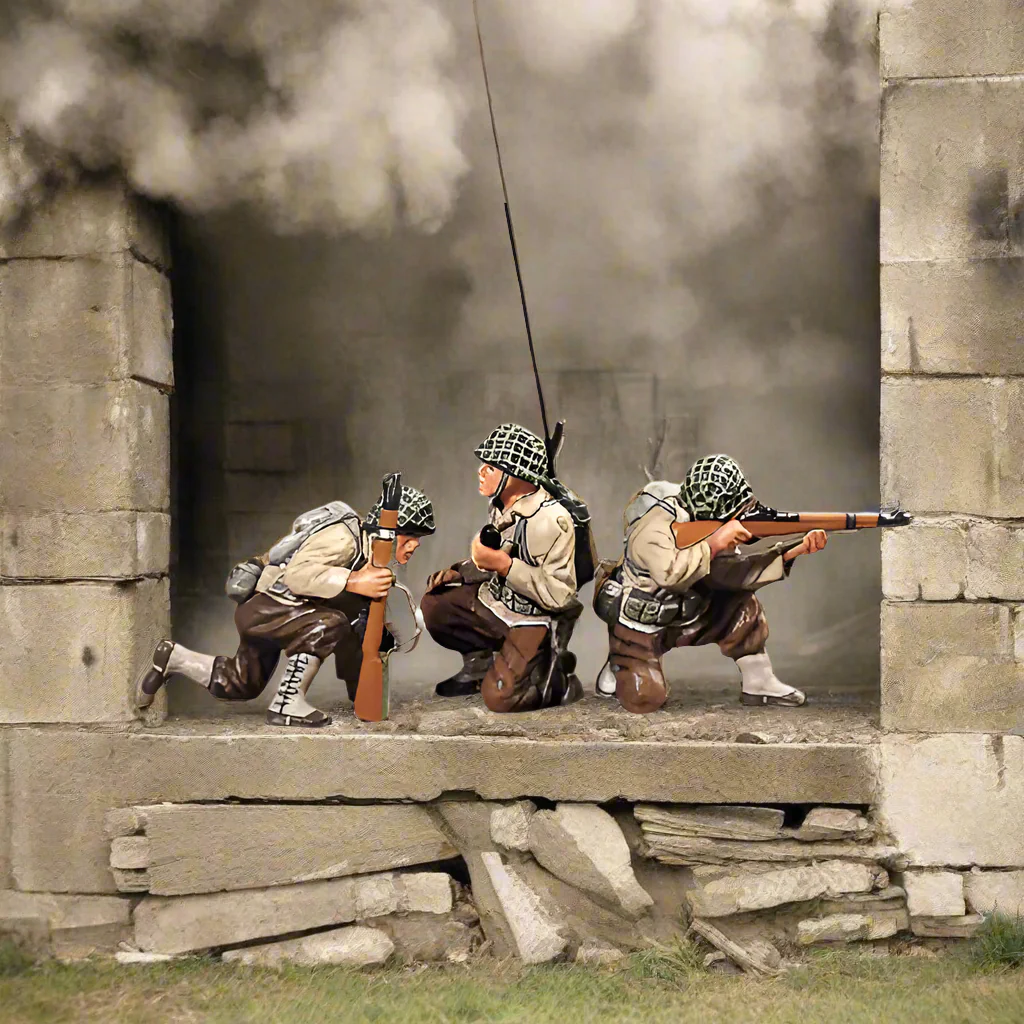
The ‘Signals Section’ (DD018) from King & Country is a finely crafted 1:30‑scale all‑metal set released in 2003 and retired in 2008. It features three U.S. 1st Infantry Division radiomen in dynamic poses: one crouching, one kneeling, and one standing to operate the radio equipment. Cast in pewter, hand‑painted and highly detailed, DD018 exemplifies King & Country’s dedication to expressive realism. Collectors prize the clear insignia, the intricate radio backpack, and the variant poses that combine utility with narrative motion.
Historical Background
On D‑Day (June 6, 1944), the U.S. 1st Infantry Division landed on Omaha Beach, tasked with establishing firm footholds under intense German fire. Signals sections—small teams of radiomen—were pivotal in maintaining command and coordination. Armed with SCR‑284 or SCR‑536 radios and heavy field telephone gear, they moved forward under fire to relay orders, report enemy positions, and call for reinforcements or artillery support. Their efforts, often conducted from exposed positions such as shell craters or dune edges, enabled dynamic command and effective artillery adjustment. Without these radiomen, units risked fragmentation or misdirected engagements. Despite high casualties, their communication lifeline helped Allied forces secure the beachhead, propelling the Normandy breakout.
The signals men wore the 1st Infantry Division’s ‘BIG RED ONE’ shoulder patch and identifiable field radio backpacks, reflecting both functionality and unit pride. Their bravery ensured that operations remained cohesive amid the chaos of invasion and shifted the tide toward Allied success in Western Europe.
Collector Notes
DD018 is packaged in King & Country’s signature presentation box with foam inserts. Identification tips include the product code ‘DD018’ and the inclusion of three radiomen poses. Common variants may display slight paint differences in flesh tones or radio wiring detail. Look for intact antennae and connected handset cord—frequent break points. Pewter casting may develop minor stress hairline cracks, especially at tubing joints—check these carefully. On the secondary market, complete boxed examples typically sell between €90‑€130 (roughly $100‑$145), though prices vary by condition and regional demand. Loose figures without box or accessories generally fetch €60‑€80. Overall, well‑preserved DD018 sets remain popular due to their narrative poses and specialized representation of wartime communication roles.
Find this set
Currently available on eBay
Matching DD018 listings, lowest displayed price first. Includes shipping when quoted.